
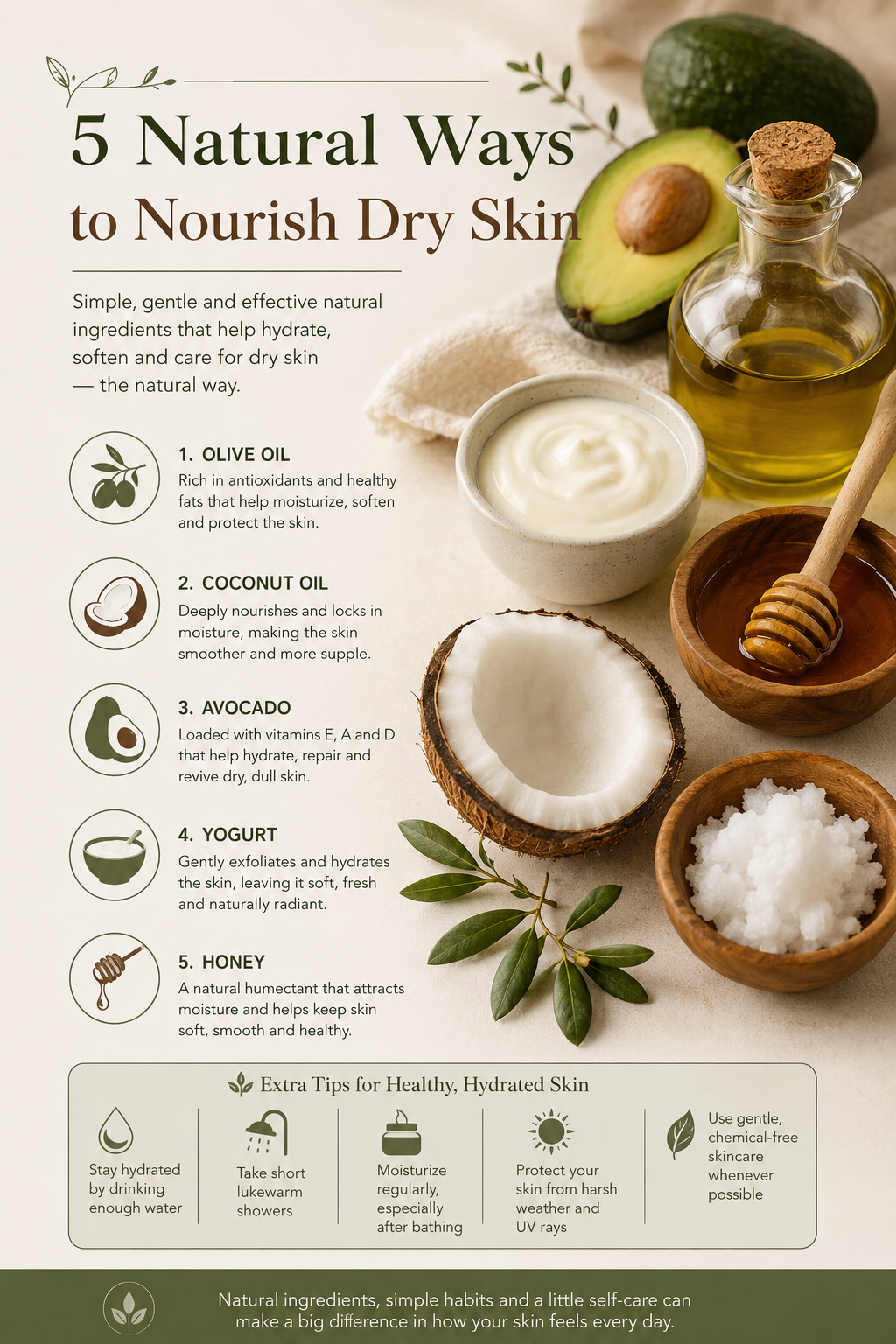
5 Natural Ways to Help Nourish Dry Skin
Dry skin is common, especially during winter, when cold weather, dry air, hot showers and indoor heating can reduce moisture from the skin. But taking care of dry skin does not always mean using expensive skincare products.
Some simple ingredients that are commonly available at home—such as olive oil, coconut oil, avocado, plain yogurt and honey—can be incorporated into a gentle skincare routine. They may help soften the skin and reduce the feeling of dryness when used appropriately.
However, natural does not automatically mean suitable for everyone. If your skin is sensitive, acne-prone or prone to irritation, always patch-test a new ingredient first. For persistent, painful, cracked or inflamed skin, it is better to consult a dermatologist.
Here are five simple ways to care for dry skin naturally.
1. Olive Oil
Olive oil contains fatty acids and antioxidant compounds that can help soften dry skin. However, it may feel heavy on some skin types, so it is best used in moderation.
How to use olive oil
For dry body skin:
Apply a small amount of olive oil to slightly damp skin after bathing. Massage gently until it is absorbed.
For very dry areas:
A few drops can be applied to areas such as elbows, knees or heels. Avoid applying a large amount, especially if your skin is prone to clogged pores.
As a simple body scrub:
If you enjoy physical exfoliation, you can combine a small amount of olive oil with finely ground sugar. Massage very gently and rinse thoroughly.
Avoid aggressive scrubbing because excessive exfoliation can damage the skin barrier and make dryness worse.
2. Coconut Oil
Coconut oil is widely used in traditional skincare and can work as an occlusive moisturizer, helping reduce moisture loss from the skin.
It can be particularly useful for dry areas of the body, such as elbows, knees, hands and feet.
How to use coconut oil
Apply a small amount of coconut oil to clean, slightly damp skin after bathing. Massage gently and allow it to absorb.
For very dry hands or feet, you can apply a thin layer before bedtime.
There is no need to heat coconut oil before applying it. If the oil has solidified, simply allow a small amount to melt naturally between your palms.
Important: Coconut oil may clog pores for some people, so it may not be the best choice for oily or acne-prone facial skin.
3. Avocado
Avocado contains naturally occurring fats and several nutrients, making it a popular ingredient in many skincare products.
Instead of rubbing an avocado peel directly onto your face, which may cause unnecessary friction or irritation, a gentler approach is preferable.
A simple avocado mask
Mash a small amount of ripe avocado into a smooth paste and apply a thin layer to clean skin.
Leave it on for around 10–15 minutes, then rinse gently with lukewarm water and apply a suitable moisturizer.
Do not use an avocado mask on irritated or broken skin, and stop immediately if you experience burning, itching or redness.
4. Plain Yogurt
Plain, unsweetened yogurt contains lactic acid and other components that can provide gentle exfoliating and moisturizing benefits.
However, skincare products formulated with lactic acid are generally more predictable than homemade yogurt treatments. If you choose to try yogurt, keep the application simple and avoid prolonged contact.
How to use yogurt
Apply a thin layer of plain, unsweetened yogurt to clean skin.
Leave it on for approximately 5–10 minutes, then rinse thoroughly with lukewarm water.
You can use this approach occasionally rather than treating it as a daily skincare routine.
Avoid flavored or sweetened yogurt, and do not use it on broken, irritated or freshly exfoliated skin.
5. Honey
Honey is a natural humectant, which means it can help attract and retain moisture. It also contains compounds that have been studied for their potential skin-supporting properties.
For dry skin, honey can be used as a simple occasional mask.
How to use honey
Apply a thin layer of plain honey to clean skin and leave it for around 10 minutes.
Rinse thoroughly with lukewarm water and gently pat the skin dry.
If you have sensitive skin, perform a patch test first. Avoid honey if you know you are allergic to it or bee-related products.
Natural Skincare Works Best When It Is Gentle
Using natural ingredients can be a useful addition to a skincare routine, but more is not always better.
Dry skin primarily needs help maintaining its protective skin barrier. Along with occasional home remedies, consider these simple habits:
- Take shorter showers with lukewarm rather than very hot water.
- Use a gentle, fragrance-free cleanser.
- Apply moisturizer while your skin is still slightly damp.
- Avoid excessive scrubbing and frequent exfoliation.
- Protect exposed skin from cold, dry weather.
- Drink enough water as part of your normal healthy routine.
- Choose skincare products according to your skin type rather than assuming that every natural ingredient will suit you.
For very dry skin, a fragrance-free cream or ointment containing ingredients such as ceramides, glycerin or petrolatum may be more reliable than a DIY remedy.
A Simple Winter Routine for Dry Skin
You do not need a complicated routine to take better care of dry skin.
Morning:
Gentle cleansing → moisturizer → sunscreen
Evening:
Gentle cleansing → moisturizer → a thin layer of an appropriate occlusive on very dry areas if needed
Natural ingredients such as coconut oil, olive oil or honey can be occasional additions rather than replacements for a consistent skincare routine.
Final Thoughts
Dry skin does not always require an expensive collection of skincare products. Simple habits, gentle cleansing and regular moisturizing can make a significant difference, particularly during the colder and drier months.
Natural ingredients can also have a place in your routine, but they should be used thoughtfully. Patch-test new ingredients, avoid aggressive treatments and pay attention to how your skin responds.
And if dryness becomes persistent, painful, cracked, severely itchy or associated with redness and inflammation, a dermatologist can help identify the underlying cause and recommend an appropriate treatment.
The goal is not to use as many products as possible.
The goal is to keep your skin comfortable, healthy and well cared for—with a routine that is simple enough to maintain.
However, using natural avocado can help your skin smoother and healthier right after the first time using.